
Flip Pallot
a man who refused to say Miami any other way than the right way (My-Am-Uh)

The Warehouse
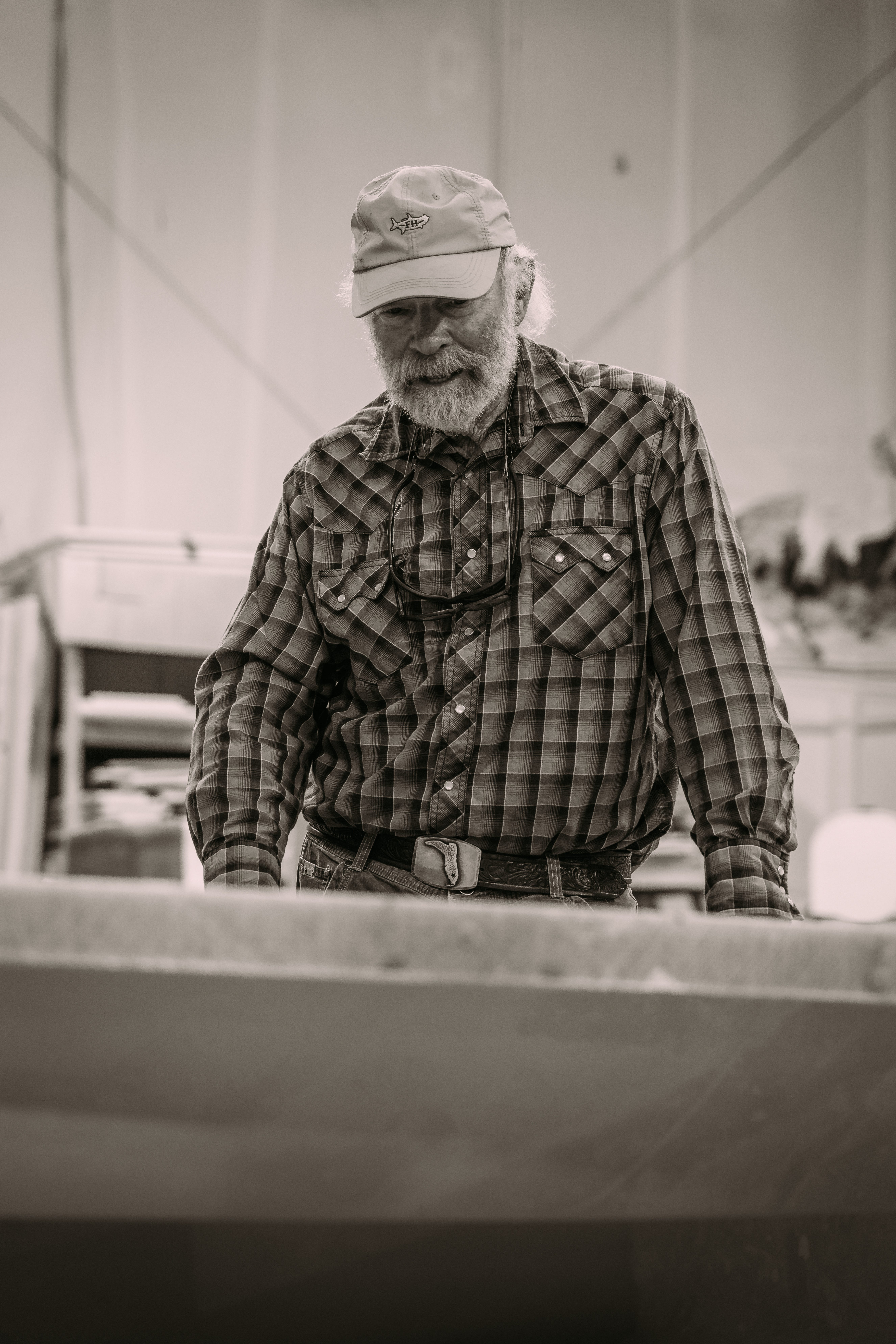
The warehouse smelled like fiberglass resin and someone’s lunch from three hours ago. Everyone had left. Flip was drawing a hull line on a napkin. He drew hull lines like other men sign checks. Without looking.
We were standing around a skiff, working through the deck layout together, and my coffee had gone cold sometime during the conversation about chines. His coffee cup left a ring on the bare fiberglass. A perfect brown circle on white gelcoat. I remember thinking even that looked like art.
We couldn't agree on the deck layout. I said what I thought, which cost me something to do. After that, Flip treated me differently. It was a small education: men who spend their lives surrounded by agreement don't respect the agreeing. They're waiting for somebody to push back, and most never do. Flip built the deck his way, of course.
Worth
He never asked you to prove anything. That was the problem. You just wanted to. You wanted to walk into a room with Flip Pallot and have something to offer besides your presence, which was already more than he required.
I think the redfish sitting in Mosquito Lagoon mud feel the same thing but I can’t confirm this.
The Fly Shop
He recognized me at a fly shop event years before the skiff. I was standing in a room full of people who had more right to be there than I did. Flip looked across the crowd and said my name. Just my name. Not loud.
The room changed. I could feel it. People who had been looking through me started looking at me. Not because I had done anything different between one second and the next, but because Flip Pallot had aimed his attention in my direction and attention from Flip Pallot was a currency nobody in that room could counterfeit.
I didn’t earn it. That’s important. I hadn’t caught the right fish or poled the right flat or published the right article. He just remembered me from some prior intersection that I had assumed was forgettable, and he chose to say my name out loud in a room full of people who would have given anything for the same.
That’s a kind of power most men don’t know exists. The kind that doesn’t diminish when you hand it to someone else.
A Skiff That Still Sells Today
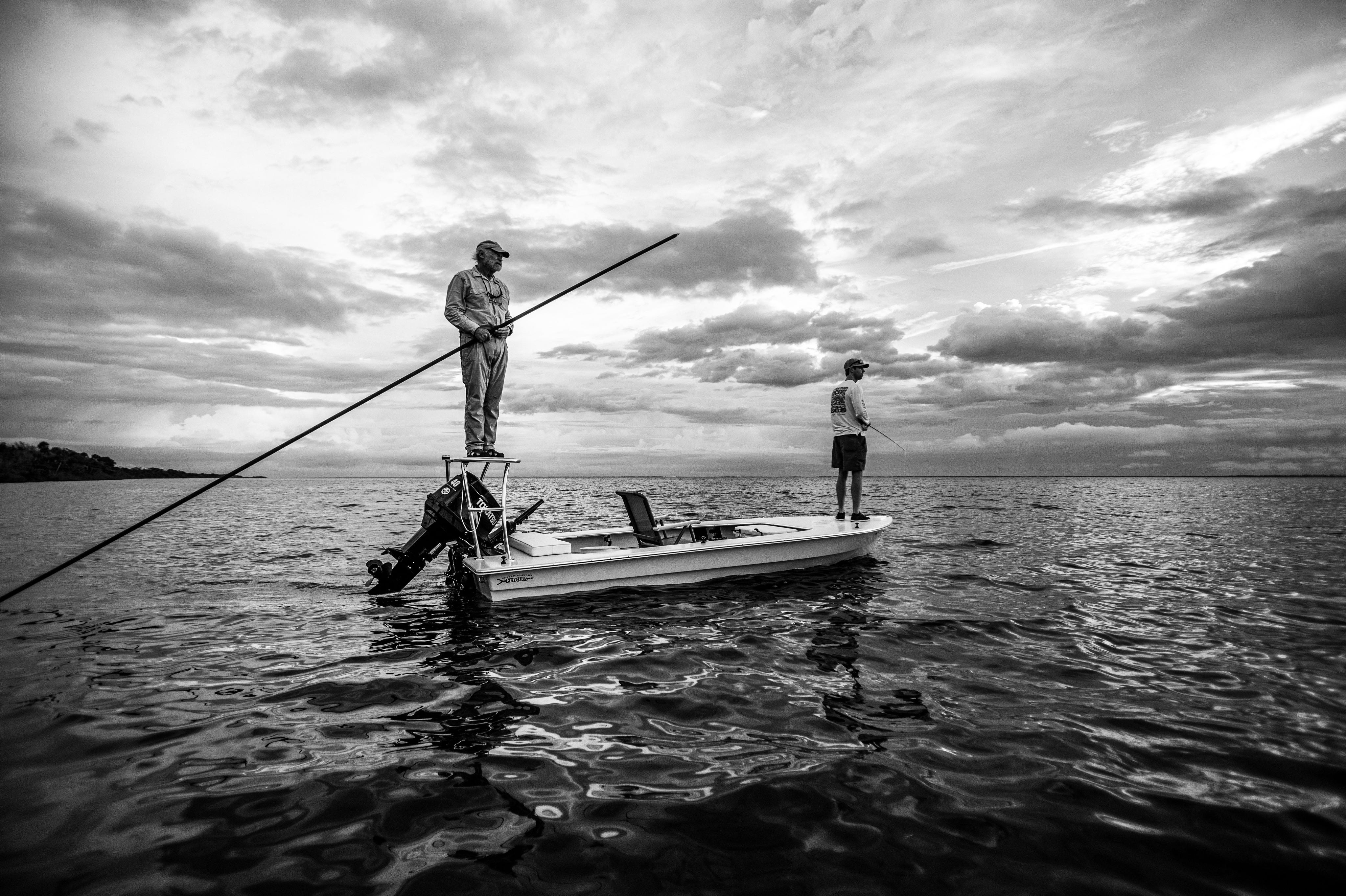
We designed a skiff together. I use the word “together” like a man holding a flashlight for a surgeon uses the word “we.”
The skiff still sells. I see it at boat ramps sometimes and feel something I don’t have a name for. It’s not pride. It’s more like seeing a dog you raised living in someone else’s yard, happy, not looking for you.
Mentor
People will call him my mentor. He wasn’t. People will say I must miss him terribly. I don’t. Not in the fashion they mean.
This is not a sad thing. This is actually the better thing.
What He Did
He put effort into everything. He wrote his name on his belongings in bubble letters that should be a typeset. The simple flies he tied belonged in a frame. His knots were deliberate. His skiff was organized. None of this was performance. It was just the baseline.
And that same attention, that refusal to be careless with small things, was how he treated a flat. A shoreline. A grassbed. A creek mouth that hadn’t been named yet. If you watched him long enough, you understood that the flies and the bubble letters and the organized skiff were the same act as protecting a fishery. There was no separation. You either cared about all of it or you were faking the parts that mattered.
The Push Pole
A push pole is a simple object. A long stick. You stand on a platform above the water and you push the boat through water so shallow it has almost given up on being water.
Flip made his mud foot from a guava tree. Found a Y-shaped branch and lashed it to the bottom of his pole. I’m convinced it didn’t work any better than the plastic ones that come affixed from the manufacturer. But after he showed me how to find the right branch and make one myself, something about pushing a boat with a piece of a tree that a man like Flip handed you always made it feel better. Lighter, maybe. Or more honest. I still can’t tell which.
Photographing Him
I took hundreds of photos of this man. Through all of them, across years, not a single frame looks bad. Most people give you one good shot out of thirty. Flip gave you thirty out of thirty. He just carried himself like someone who understood that a camera was always possible, except it wasn’t that either, because he looked exactly the same when no one was pointing one at him. A professional who never clocked in.
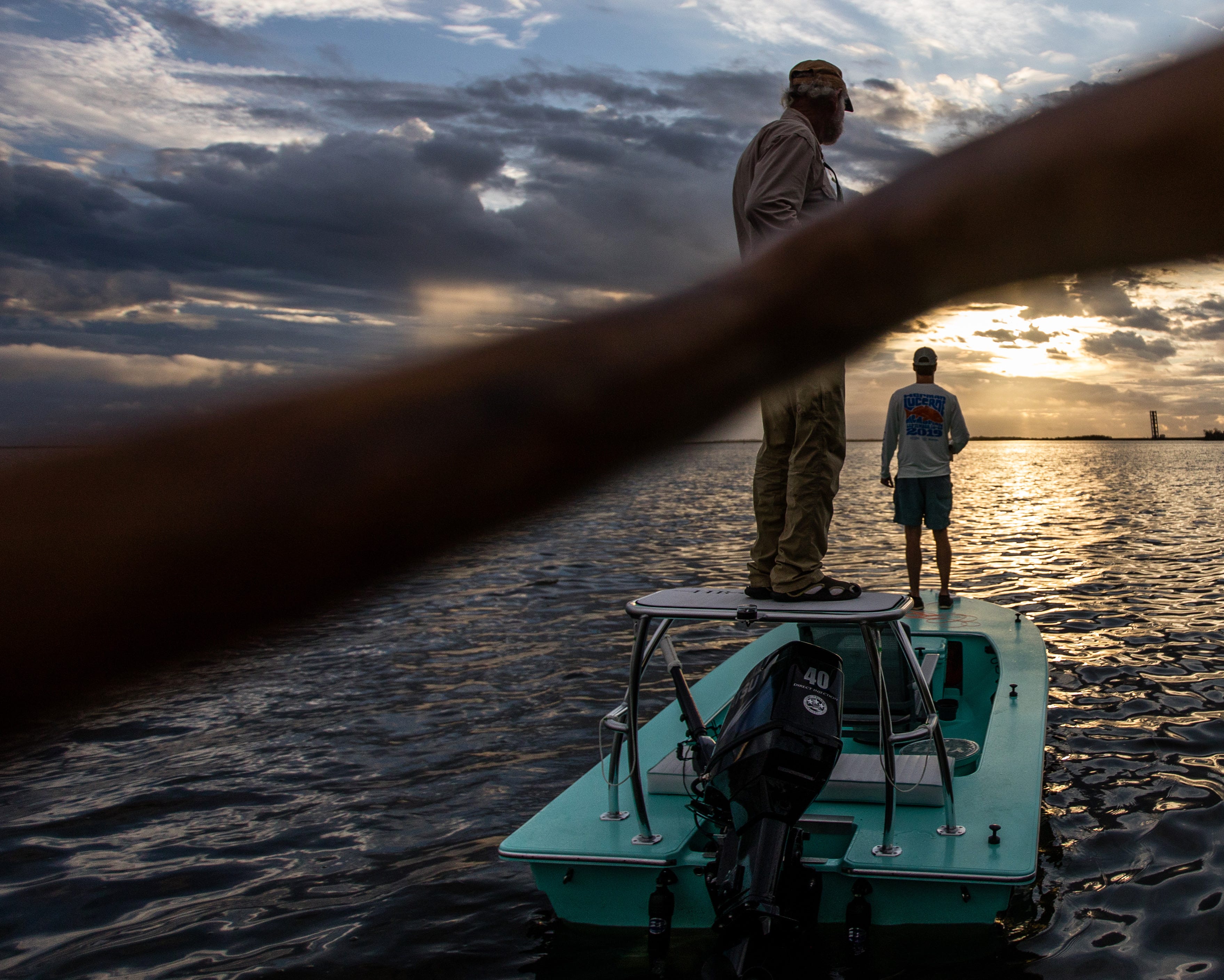
The clouds were doing something complicated the last time I shot him on the water. They looked like a painting you’d find at an estate sale in Titusville, priced at forty dollars, and you’d think, no one should sell that for forty dollars, and then you’d look up and the real sky was doing the same thing for free.
What Lasts
A man can leave a television show. Books. Interviews. Voiceovers for companies that sell things to people who fish. Flip left all of that.
But the thing that outlasts the footage and the pages is harder to describe. It’s a kind of paying attention. You can’t put it in a museum. You can’t frame it. You can only catch yourself doing it one morning, standing on the bow of a skiff in January, watching a wake that might be a fish or might be the wind, and caring about the difference.
He’s not here anymore but that particular need to care about the difference is still everywhere and I don’t think it knows how to stop.